Lewis Simon
CA
United States
Summary
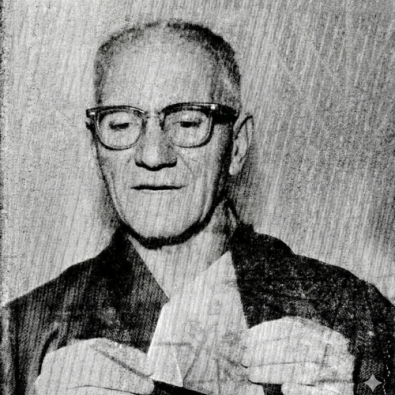
Lewis Simon (1910-1999?) of Long Beach and Los Angeles, California, was a highly regarded and enthusiastic American origami artist and teacher whose life was dedicated to sharing the art. While his exceptional talent as an educator was widely recognized during his life, his greatest lasting contribution is in the field of modular origami and the geometry of paperfolding. His inventive models—such as the Gyroscope, the Decoration Box, and various modular cubes—continue to gain recognition today, with several of his designs going viral online through video tutorials.
Background and Career
Lewis Simon was born in Philadelphia, Pennsylvania, the son of Russian immigrants. Due to the need to work, he left high school early.
Personal Life: It is believed that Lewis Simon was never married, though he maintained a close relationship with his daughter, Ruth. He lived and folded in the Los Angeles, California area and was active with the Pacific Coast Origami Guild. He worked for the U.S. Postal Service until his retirement, during which time he attended night school and excelled in mathematics, physics, and Spanish.
Origami Discovery and Teaching: He rediscovered origami later in life after receiving a kit from his daughter, Ruth, and became deeply involved after acquiring Akira Yoshizawa's The World of Origami. Following his retirement, he began serving as a volunteer in the Long Beach VIPS (Volunteers in Public Schools), where he effectively integrated origametry (the geometry of paperfolding) into his math lessons to make the subject engaging for intermediate school pupils.
Major Achievements and Contributions to the Origami World
Lewis Simon's legacy is defined by his ingenious modular designs and his passionate role as an evangelist for the educational power of origami.
Inventive Modular Designs: He is particularly known for his creative work in modular origami, especially his cubes. Several of his models, including the Gyroscope, the Triangle Edge Module (used for an icosahedron), and the Decoration Box, remain popular in the origami community, with various video tutorials of his designs becoming widely shared online. The popular Ring of Cubes by Bennett also shares a modular connection to his foundational work.
Contribution to Modular Literature:
His work on the dodecahedron using a variation of his cube module was published, with credit given to both him and Bob Neale.
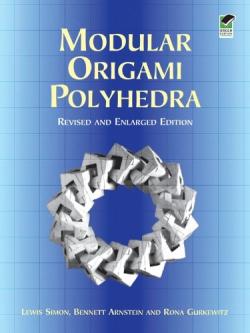
In recognition of his foundational work, he was posthumously made the first author of the Modular Origami Polyhedra revised and enlarged edition, 1999 Doceer.
Teaching and Advocacy: Simon taught his models, including his original Geisha, to various groups, including the British Origami Society. He taught in both English and Spanish in numerous settings—schools, clubs, hospitals, and public parks—demonstrating the art's powerful pedagogical value.
Pilgrimage to Japan: His lifelong ambition to visit Japan was realized in October 1971, where he was welcomed as a guest in a Japanese home and had the opportunity to meet many of the Japanese folders he admired.
This text was summarized by AI from an article in the origamian, written by Alice Gray